


Characteristics of Pure Honey and How to Tell It Apart from Fake Honey
December 17, 2025
BeeFams, have you ever bought honey that was claimed to be “pure,” but once you opened it or tasted it, something felt off or questionable? That’s why it’s so important to know how to distinguish pure honey from fake honey, so your health and money don’t go to waste. Let’s find out why fake honey is so common on the market and learn the key differences between genuine and fake honey!
Why Is Fake Honey So Common on the Market?
Honey is a natural product with high demand and strong market value. It’s no surprise that some parties mix honey with sugar syrup, glucose, or other cheaper ingredients to increase profit. Interestingly, this issue doesn’t only happen in Indonesia.
Various reports from sources such as Food Safety publications, ResearchGate, and MDPI reveal that honey is one of the most frequently adulterated food products due to its complex composition and the difficulty of full control.
Consuming fake honey can have several negative impacts, including:
- The expected health benefits may not be optimal because active compounds are reduced.
- Added sugar or syrup can increase blood sugar levels, especially for people with conditions such as diabetes.
- Trust in genuine honey products may decline, even though pure honey offers many benefits.
- Reduced consumer confidence in honey products and the honey industry as a whole.
That’s why, BeeFams, understanding the characteristics of pure versus fake honey is essential to becoming a smarter consumer.
How to Distinguish Pure Honey from Fake Honey
The following methods are commonly used as simple home checks and are widely known. However, it's important to understand that these methods are not official scientific parameters based on Codex Alimentarius or Indonesian National Standards (SNI).
The results of these tests are also influenced by the type of honey, nectar source, natural moisture content, and storage process. Therefore, the following characteristics should be considered only as preliminary indications.
Let’s take a closer look:
1. Viscosity
- Pure honey: Its texture feels heavy and thick, making it less easy to pour from one container to another. When poured, it flows slowly and appears smooth and well-formed.
- Fake honey: More watery and runny due to higher water content, moving easily in the bottle like regular syrup.
2. Taste
- Pure honey: Has a mild sweetness that fades quickly in the mouth. It may also have a slight acidic or bitter note, depending on the nectar source. When heated or cooled, its taste can change because its enzymes are sensitive to temperature.
- Fake honey: Tastes sharply sweet, similar to liquid sugar, with little to no natural flavor complexity.
3. Aroma
- Pure honey: Releases natural floral, grassy, or resin-like aromas when smelled. Each type of honey has its own distinctive scent.
- Fake honey: Often lacks a natural aroma or may smell unusual due to added chemicals or artificial caramel.
4. When Dissolved in Water
- Pure honey: Does not immediately dissolve. It tends to clump at the bottom of the glass and dissolves only after stirring.
- Fake honey: Dissolves instantly without stirring because of its sugar and water mixture.
5. Bread Spread Test
- Pure honey: When spread on bread, it does not make the bread soggy. The bread remains dry and firm because pure honey has low water content.
- Fake honey: Causes the bread to become wet and soggy within minutes due to excess water.
6. Absorption on Fabric
- Pure honey: When dropped onto white fabric, it does not leave stains.
- Fake honey: Often leaves yellowish stains because of added water or syrup.
7. Clarity
- Pure honey: Usually not overly clear and may appear slightly cloudy with small particles like pollen, this is a natural sign.
- Fake honey: Looks very clear and shiny, resembling factory-made syrup.
8. Tissue Paper Test
- Pure honey: Does not soak or wet tissue paper when dropped onto it.
- Fake honey: Leaves a wet mark or water stain, again due to higher moisture content.
9. Crystallization Test
- Pure honey: Naturally crystallizes over time, becoming thicker or partially solid. This is normal due to the presence of glucose oxidase enzymes.
- Fake honey: Remains liquid even after long storage because of added diluents.
Although these characteristics can help as an initial check, the most accurate assessment of honey quality and authenticity is done through standardized scientific parameters. These parameters include moisture content, HMF (Hydroxymethylfurfural) levels, diastase activity, and food safety testing in accordance with international standards such as Codex Alimentarius and Indonesia’s National Standard (SNI).
Equally important is reading product labels and checking the origin of the honey you buy, such as nectar source, country of origin, and any available certifications. Choosing honey from trusted producers is essential, such as HDI Clover Honey, which has proven purity and quality.
HDI Clover Honey, Pure Natural Honey to Support Your Health
HDI Clover Honey is one of HDI’s best-selling bee products, sourced from pristine clover flower fields in New Zealand. It is also enriched with premium bee pollen for added natural benefits. HDI Clover Honey has been tested for purity and natural quality, with an average HMF value of 16.34 mg/ kg. HMF levels are used as an indicator of honey purity and whether it has undergone excessive heat processing.
According to international Codex Alimentarius standards and Indonesia’s National Standard (SNI), the maximum HMF value for honey to ensure authenticity and minimal heat exposure is below 40 mg/ kg. The quality and purity of HDI Clover Honey are further supported by its diastase number (DN) of 16.75. Diastase activity is an important indicator of high-quality, pure honey. Under Codex Alimentarius standards, good-quality honey has a diastase value above 8, while SNI sets the standard above 3.
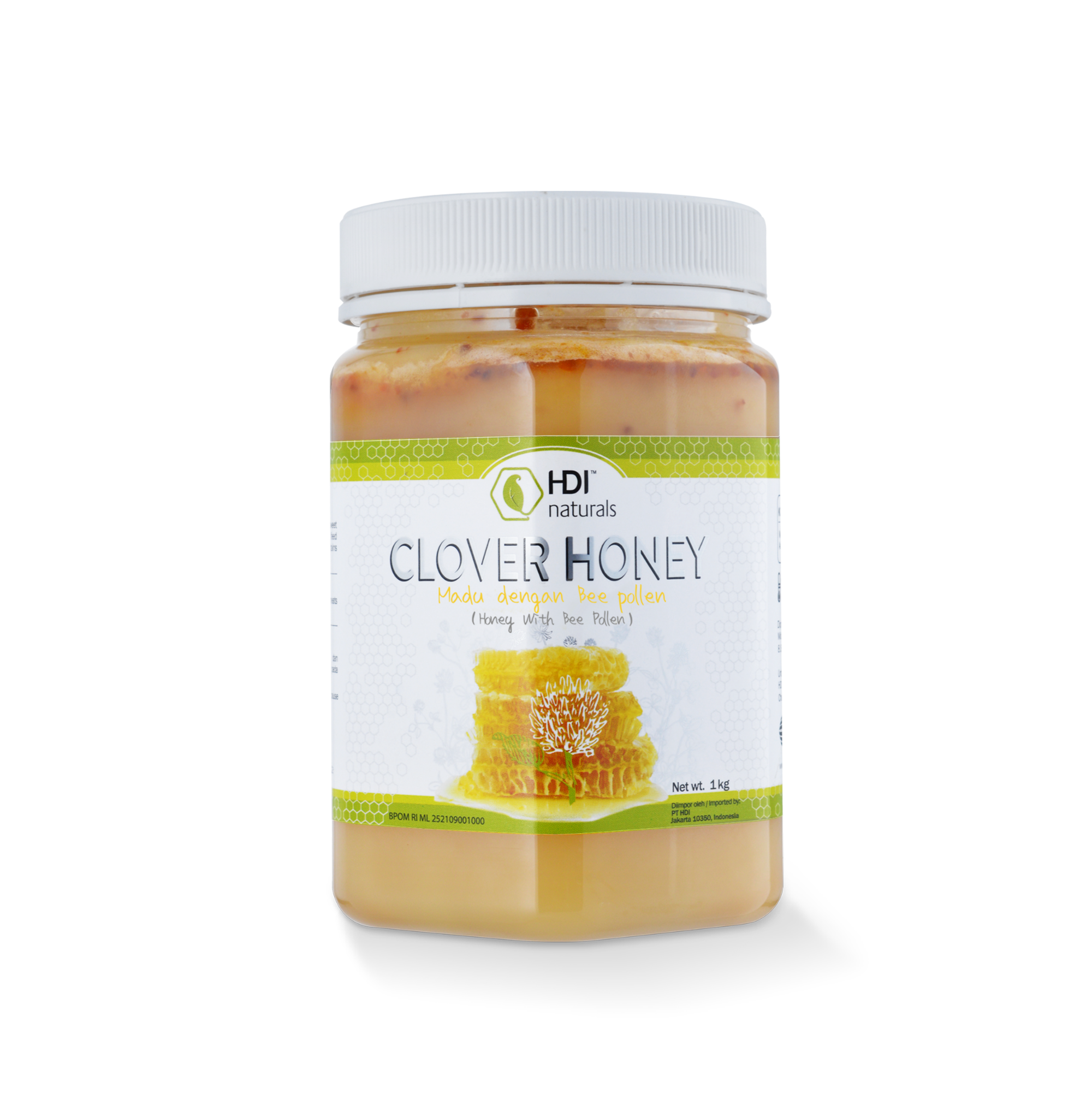
Benefits of HDI Clover Honey include:
- Supporting smoother digestion and relieving constipation
- Helping maintain immune function and boosting natural energy
- A healthier sugar alternative suitable for people with diabetes due to its relatively low glycemic index (53) and insulin index (49)
- Supporting better sleep quality and improved mood through serotonin support
- Aiding wound healing
How to consume it is simple, just dissolve one tablespoon of HDI Clover Honey in a glass of water or use it as a sugar substitute in fruit juice. It’s easy, practical, and suitable for morning or evening consumption based on your needs.
You can get HDI Clover Honey and other bee products from HDI at hdi.com or at HDI Centers.
Let’s start choosing authentic honey, enjoy its benefits, and take care of your health naturally! •
- https://www.farmaku.com/artikel/ciri-ciri-madu-asli-dan-perbedaannya-dengan-madu-palsu/
- https://www.mdpi.com/2304-8158/13/22/3630
- https://www.sciencedirect.com/science/article/abs/pii/S0889157518308159




How to Naturally Boost Your Immune System


